

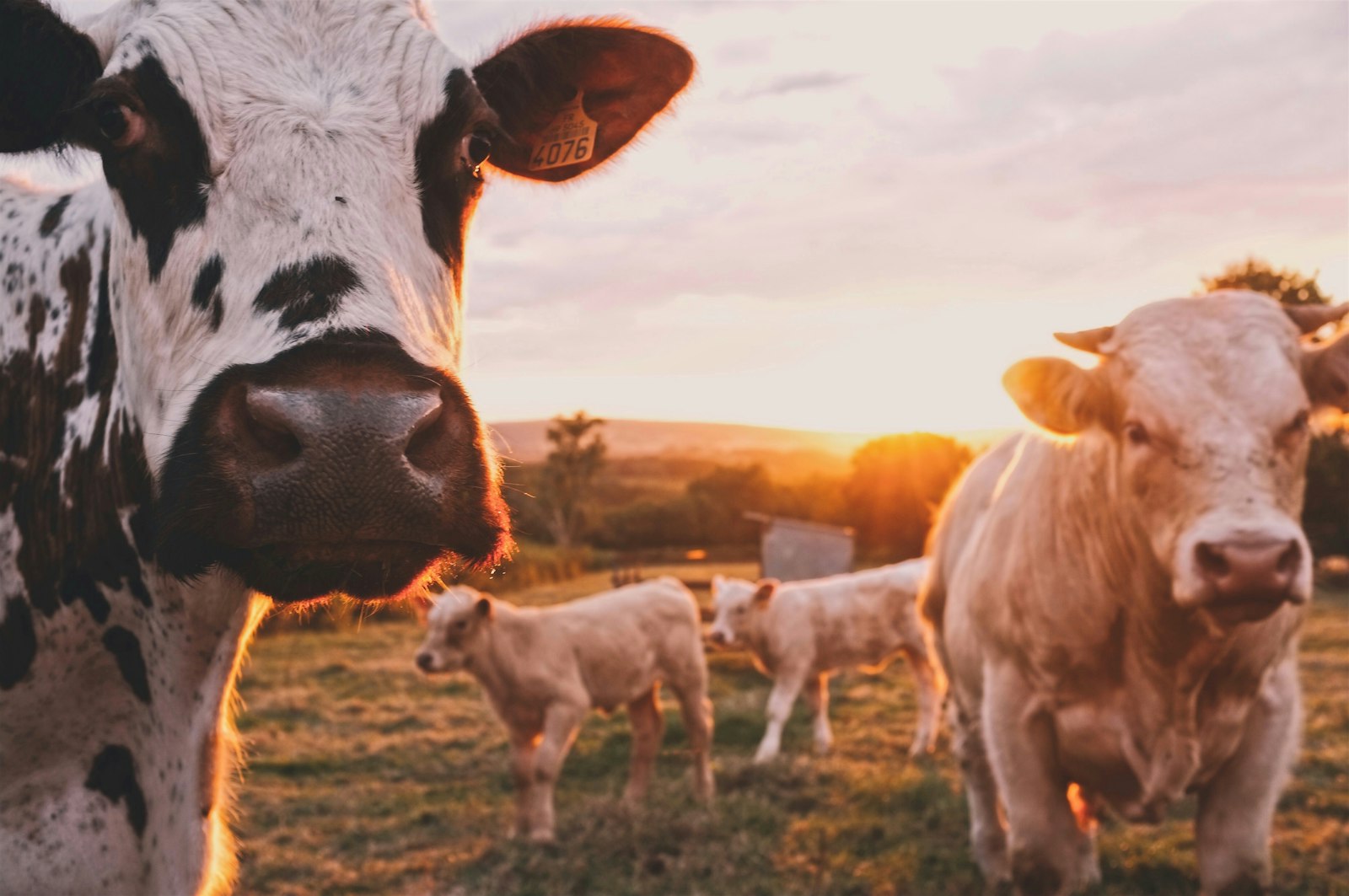
Here is a thought experiment that cuts to the heart of the food-and-climate question. Take the average Western diet — rich in beef, lamb and dairy — and imagine every one of the world's eight billion people eating that way, at that standard, every day. The uncomfortable answer from the data is simple: the planet cannot physically support it.
The footprint of a Western plate
The Global Footprint Network measures how much productive land and sea each lifestyle requires. If the entire world consumed resources at the rate of the average high-income Western country, humanity would need the regenerative capacity of several Earths — not one. Food, and meat in particular, is one of the largest single components of that overshoot.
Why meat is the binding constraint
Livestock occupies the great majority of the world's agricultural land while delivering a small share of its calories and protein. Expanding that model to the whole planet would require clearing forests and ecosystems we cannot afford to lose, draining freshwater we don't have, and emitting greenhouse gases far beyond any safe climate budget. It is not a question of willpower; it is a question of arithmetic and finite land.
The Western meat diet was never designed to scale to eight billion people. The maths simply doesn't close.
The EAT-Lancet picture
The EAT-Lancet Commission's "planetary health diet" set out what it would take to feed an estimated ten billion people by 2050 within the planet's ecological limits. Its central conclusion: a roughly two-fold increase in the consumption of fruit, vegetables, nuts and legumes, and a roughly 50% reduction in red meat globally. The point is not that everyone must give up meat — it is that the world cannot run on a meat-maximising diet, and the gap has to be filled by better alternatives.
This is the opportunity, not just the warning
If the world's growing population is going to eat well and stay within planetary limits, the difference has to be made up by sustainable, lower-impact food — including high-quality meat alternatives that people genuinely want to eat. For the world's nearly two billion Muslims, that food also has to be halal. Halal-certified, low-carbon, meat-alternative products are not a fringe idea; they are part of the answer to one of the defining problems of the century.
That is exactly the brief our Sustainable Food Division was created to deliver — through our partnership with Sofood FZCO, bringing sustainable halal and meat-alternative food to the UK and EU.
Sources & further reading: Global Footprint Network (Ecological Footprint / Earth Overshoot); EAT-Lancet Commission, "Food in the Anthropocene" (2019); Our World in Data, Land Use & Diets; Poore & Nemecek, Science (2018). Figures are indicative and drawn from publicly reported research.
← More articles